Alright, so let’s dive into something we extension spring suppliers field all the time: when a customer orders a custom extension spring, they’re usually hyper-focused on load rate, hook type, or material… but then we get that follow-up question: “Wait, what surface treatment do I need for this?” Extension Spring
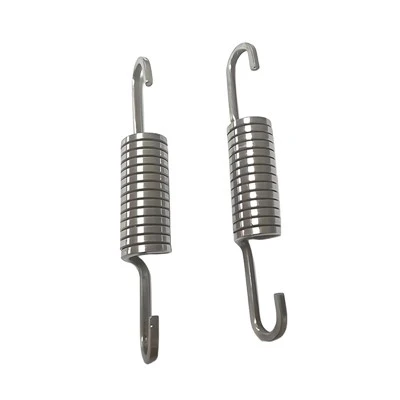
It’s such a relatable situation—most folks don’t realize surface treatments aren’t just about making parts look shiny. They’re basically the unsung heroes that keep your springs from rusting out, wearing out too fast, or failing when you need them most. I’ve been doing this for, uh, let’s be real, way longer than I care to admit, and I’ve seen way too many projects go sideways because someone skipped a treatment that could’ve saved them headaches (and cash) down the line.
First, let’s cut through the jargon a little. I’m not gonna sit here and use fancy terms no one understands. Surface treatments for extension springs? They’re just specialized coatings or processes we apply to the metal surface to fix specific problems. The big three pain points we solve here are: rust/corrosion (huge if your spring’s going outdoors, near water, or even in a humid warehouse), friction/wear (extension springs stretch and contract nonstop—you don’t want that movement chewing up the metal), and tiny surface scratches or defects that could turn into cracks under tension (extension springs are under constant pull, so small flaws = big issues).
Let’s break down the most common treatments we use day-to-day, with real examples of when each is perfect—no textbook stuff, just what works for our customers.
First up: Passivation. Wait, I know, that sounds like a lab term, but hear me out. This is for stainless steel springs, hands down. If your spring’s made of 302 or 316 stainless, passivation is non-negotiable unless you’re just slapping it on a random shelf for a non-critical project. Here’s what it does: we dip the spring in a mild acid solution (super controlled, no toxic mess) that strips away free iron from the metal surface. Free iron is what makes stainless not stainless—if it’s on the surface, it rusts. The acid leaves a pure chromium oxide layer instead, which is what actually resists corrosion. I had a customer a couple months back that was using generic stainless extension springs for a food processing conveyor. They didn’t get passivated, and within 6 months, they had tiny rust spots that were contaminating their product. They called us in a panic, we reworked their entire order with passivation, and that’s been a year ago—zero issues. Pro tip: don’t skip passivation just to save a buck. It’s like putting a raincoat on a waterproof jacket; the jacket’s already water-resistant, but the coat keeps it from picking up gunk that ruins the whole thing.
Next: Zinc Plating (also called electrogalvanizing). This is the workhorse for carbon steel springs—like the ones we use for garage doors, farm equipment, or general hardware. Zinc’s whole thing is it sacrifices itself to protect the steel underneath. So if there’s a scratch in the zinc, the zinc rusts first instead of the spring. It’s cheap, it’s easy, and it does the job for indoor or mild outdoor use (like a garage that’s not in constant rain). But here’s the catch: zinc plating is only good for mild environments. If your spring’s going to be submerged in water, or near salt (like a dock or coastal area), zinc’s not enough. Also, don’t get it confused with zinc-rich paint—this is a proper electroplating process, so the zinc is bonded to the metal, not just brushed on. I once had a guy try to cut costs by using spray-on zinc on a spring for his trailer hitch. It flaked off within a month, and his spring snapped while he was hauling a lawnmower on the highway. Lesson learned: real zinc plating = worth the extra $0.05 per spring.
Wait, there’s a spin on zinc plating that’s getting super popular lately: Zinc-Nickel Plating. This is the upgrade. Instead of pure zinc, we mix in 10-15% nickel, and holy cow, the corrosion resistance jumps like 3x. We use this for springs that go in moderate outdoor or even light industrial environments—like farm equipment that gets exposed to dew, or small marine parts that aren’t constantly submerged. It’s a bit pricier than regular zinc, but not crazy, and it’s way more durable. I had a rancher customer last year who was replacing extension springs on his fence line every 2 years because regular zinc rusted out. Switched to zinc-nickel, and he just texted me last month saying they’re still going strong 3 years later. Total game-changer for that use case.
Now, if you need next-level corrosion resistance—like for saltwater, chemical processing, or outdoor stuff that sees rain and snow nonstop—we’re talking about Powder Coating. Wait, people think powder coating is just for looks, but on extension springs, it’s way more. We spray a dry polymer powder onto the spring, then bake it in an oven so it melts into a thick, hard, uniform coating. It’s way more durable than liquid paint, and it seals the metal completely, so water, salt, and chemicals can’t get in. The downside? You can’t see the spring’s surface finish anymore, and the coating can add a tiny bit of thickness—so you have to adjust the spring’s pre-load accordingly. But if you need it to hold up in brutal conditions, it’s the way to go. I did a big order a while back for a company that makes playground equipment—their extension springs go in a park that’s in a coastal town, and regular zinc wouldn’t last 6 months. Powder coating in bright safety yellow? They’ve been using those springs for 4 years, no rust, no chipping. Bonus: you can get it in any color, which is a plus for playgrounds or branded equipment.
Now, let’s talk about a problem we get all the time: friction. Extension springs stretch and cycle, right? Every time they pull and release, the coils rub against each other. That friction can wear down the metal over time, leading to shorter lifespan. The fix here? Dry Lubricant Coatings. The most common ones are Teflon (PTFE) or molybdenum disulfide (MoS2) coatings. We spray or dip the spring in a thin layer of this dry lubricant (no messy oil, which is a win for clean environments) that reduces friction between coils. I used to work on a project for a medical device company—their extension springs were inside a blood pressure monitor, and oil-based lubricants would get into the mechanism and contaminate the product. Switched to Teflon coating, and the springs now last 10x longer because the coils don’t grind against each other. The only thing to watch here is that these coatings can’t handle super high temperatures—if your spring’s going to be in a hot engine or something, dry lubricant might break down, and you’d need a different option.
Wait, another one that’s specific to extension springs: Black Oxide Coating. This is like the old-school, workhorse treatment that’s been around forever. We dip the spring in a hot chemical solution that turns the surface black, and it creates a thin oxide layer that resists minor rust and gives a nice matte look. It’s super cheap, and it’s great for indoor parts where looks matter a little but you don’t need heavy corrosion resistance—like cabinet hardware or small appliance springs. The downside? It doesn’t hold up to moisture or heavy wear, so it’s not for outdoor use. I get a lot of customers ordering black oxide for pantry door extension springs, and that’s perfect—they never see the door get wet, so it’s all good. No need to overdo it with a fancy coating when a simple black oxide does the job.
Oh, and let’s not forget Electroplated Tin for specific use cases. Wait, why tin? It’s non-toxic, so we use this for extension springs that go in food or beverage equipment. If you can’t have any leaching of chemicals or metals into food, tin is the way to go. It has okay corrosion resistance, not as good as zinc, but enough for dry food storage or parts that only touch food occasionally. We did a big order for a canning supply company last year, and they specifically asked for tin plating because they didn’t want any zinc contamination on their jar lids’ extension springs. Worked perfectly, no issues.
Now, here’s the thing I always tell new customers: don’t pick a surface treatment just because it’s cheap. You need to match the treatment to how the spring is going to be used. If you’re buying a spring for a garage door that’s in a dry garage, black oxide is fine. If it’s for a gate that’s outside year-round? Go with zinc-nickel or powder coating. If it’s for a food processor and can’t have rust? Passivation for stainless, or tin plating for carbon steel. I’ve seen customers spend $0.10 less per spring on a cheap zinc coating, only to have to replace all 100 springs a year later because they rusted. That ends up costing them way more in the long run.
Wait, another pro tip: always ask us to test the treatment before a big order if you’re unsure. We do small sample springs for free (for our regular customers, anyway—if you’re new, we charge a tiny fee but it’s worth it) so you can see how it holds up to your specific conditions. I had a customer last quarter that was building a custom RV, and they weren’t sure if a powder coating would hold up to road salt in the winter. We sent them 5 sample springs with powder coating, they tested them by leaving them in a bucket of salt water for 2 weeks, and when they came out, not a spot of rust. They placed the order that same day, and those springs have been on their RV for 6 months, no issues.
I should also mention what we don’t recommend, just to save you from headaches. Don’t use regular paint on extension springs—liquid paint is thick, it can flake off when the coils move, and it doesn’t seal the metal as well as powder coating. Don’t skip passivation on stainless steel—even if you think it’s just for indoor use. I once had a customer that put a stainless spring on a shelf for a year, and when they took it out, it had rust because there was free iron on the surface from the manufacturing process. Passivation fixes that before it ever happens.
At the end of the day, surface treatments for extension springs aren’t one-size-fits-all. It’s like choosing the right shoes for your activity—you wouldn’t wear flip-flops hiking, right? Same with springs: pick the wrong treatment, and you’ll be replacing them sooner than you need to.

If you’re in the market for extension springs, and you’re not sure which surface treatment is right for your project—whether it’s for a garage door, farm equipment, medical device, playground, whatever—hit us up. We’ve been doing this for years, we’ve worked with every kind of customer, and we can help you pick the exact treatment that fits your needs, your budget, and your specific use case. No pushy sales stuff, just real advice from people who know extension springs inside and out. We can send you samples, walk you through the specs, and make sure you get exactly what you need so your project doesn’t fail because of a surface treatment mistake. Don’t hesitate to reach out—we’re here to help.
Extension Spring References:
- ASM International. (2008). Surface Engineering for Corrosion and Wear Resistance. ASM Handbook, Volume 5A.
- Budinski, K. G. (2018). Surface Treatment of Metals for Wear and Corrosion Resistance. Tribology Series, Elsevier.
- Spring Manufacturers Institute. (2021). Extension Spring Design, Materials, and Surface Treatment Guidelines. SMI Technical Bulletin No. 107.
- Zinc Institute. (2020). Zinc and Zinc-Alloy Plating for Corrosion Protection of Steel Components. Zinc Development Association Publication ZDA-12.
- Powder Coating Industry Association. (2019). Specifications for Powder Coating of Metal Spring Components. PCI Technical Report TR-004.
- Food and Drug Administration. (2022). Guidelines for Non-Toxic Surface Treatments for Food Contact Equipment Components. FDA Food Safety Bulletin 2022-03.
Shengzhou Deyuxiang Hardware Accessories Co., Ltd.
We are one of the most professional extension spring manufacturers and suppliers in China, also support customized service. With abundant experience, we warmly welcome you to buy high quality extension spring made in China here and get pricelist from our factory. For price consultation, contact us.
Address: No. 38, Caosheng Road, Caoqiao Street, Pinghu City, Jiaxing City, Zhejiang Province
E-mail: 877286126@qq.com
WebSite: https://www.dyx-spring.com/
