As a supplier of 630A distribution boxes, I’ve spent the last eight years talking to municipal maintenance teams, industrial facility managers, and rural grid operators about the biggest headache that keeps them up at night: vandalism to their equipment. I’ve seen 630A distribution boxes—critical hubs that power entire neighborhoods, factory wings, and public infrastructure like streetlight networks—reduced to splintered metal, exposed wiring, and safety hazards within days of being installed. Last year alone, a client in rural Ohio lost three 630A boxes to deliberate damage; the downtime left 1,200 households without power during a January cold snap, and the repairs cost 12 times the price of the boxes themselves. That’s why every anti-vandalism measure we design for our 630A distribution boxes isn’t just a bolt-on add-on—it’s rooted in the real-world frustrations our customers face. 630A Distribution Box

When we set out to build anti-vandalism 630A boxes, the first thing I learned is that one size doesn’t fit all. A box sitting in a high-traffic downtown alley in Chicago faces a completely different threat than one buried in a remote farming community in Iowa. Downtown, vandalism often means metal theft, spray paint, and forced entry with tools like crowbars or bolt cutters. Out in the country, it’s more likely to be intentional damage from ATV riders, or even pranks where people pelt the box with rocks or shoot at it. So our measures are tiered, tailored to the specific risks each location faces, and tested against industry standards that actually matter—not just generic lab tests.
Let’s start with the basics: the box itself. We don’t use thin, stamped steel for our 630A boxes. That’s the first mistake a lot of low-cost suppliers make. We use 10-gauge hot-rolled carbon steel, hot-dip galvanized after fabrication to resist rust and give it a hard, scratch-resistant surface. For extra toughness, we add a powder-coat finish that’s rated for 1,000 hours of salt spray—perfect for coastal areas where corrosion weakens metal faster than vandalism. Last quarter, we had a customer in Miami that installs boxes near a marina tell us their old boxes would rust through their doors in three years, while our first set installed two and a half years ago still looks like new, even after constant exposure to salt air and humidity. That resistance to corrosion is part of anti-vandalism too; a rusted box is way easier to break into than a solid, intact one.
Next up, the locking system. This is where a lot of people cut corners, and it’s the first thing vandals target. Our 630A distribution boxes use a heavy-duty 5-lever cam lock, not the flimsy 3-lever locks you get on cheap units. The lock body is made of solid brass, with a hardened steel shackle that can’t be cut with standard bolt cutters—we tested that ourselves, bringing in bolt cutters of all sizes and even a portable bolt cutter from a local hardware store. The shackle is also shrouded, meaning it’s covered by the lock body, so vandals can’t get a grip on it with pliers to twist or snap it. We also offer optional cylinder locks with keyed-alike or master-key systems for larger operations, like a municipal department that needs to access 50 boxes across a city—all keys are registered, so you don’t have to worry about lost keys falling into the wrong hands. I’ve had a facility manager from a food processing plant tell me that before switching to our locks, they’d average one broken lock a month; now they’ve gone 18 months without a single lock being tampered with. That’s not a sales pitch, that’s real feedback that makes our products better.
One of the most underrated anti-vandalism features we offer for 630A boxes is internal shielding. Vandals don’t just try to open the box—they try to get at the internal components, either to steal copper wiring (which is worth a lot of money on the scrap market) or to disable the power. So we line the inside of our boxes with 1/4-inch thick steel baffles that separate the main bus bars, circuit breakers, and cable terminals from the access panel. These baffles aren’t just static—they’re bolted to the box frame with security screws, so even if a vandal does manage to pry the door open, they can’t reach the live parts without taking apart multiple layers of protected metal. We also cover all exposed copper terminals with insulated plastic covers that are snap-fit and can’t be removed without a special tool, which means even if someone gets into the box, they can’t accidentally (or intentionally) short out the circuits and cause a power outage. Last year, a utility customer in Minnesota had a group of teens break into a box they’d purchased from a competitor, and they were able to steal $800 worth of copper wiring in 15 minutes. When they broke into one of our boxes, they spent 45 minutes trying to get through the baffles and the security screws, gave up, and left without any damage. That’s exactly what we want—making the hassle of vandalism not worth someone’s time.
For areas where metal theft is a bigger risk than forced entry, we have an extra feature: anti-theft bus bars. The copper bus bars inside our 630A boxes are covered with a thin layer of tin, which is worth a fraction of what pure copper is. Vandals target copper because it’s easy to sell, but tin is practically worthless. So even if someone does manage to breach the internal shielding, they’re not going to get any valuable metal to take. We also mark every internal component with a micro-dot engraving that has our company’s unique identifier—if stolen parts are ever found, they can be traced back to the box they came from, which deters a lot of scrap dealers from buying parts that don’t have proper documentation. A scrap yard owner in Ohio told us that this micro-dot system has cut down on the number of stolen metal parts they buy by 70% in the last two years; adding that to our boxes gives us an extra edge over competitors that don’t offer it.
For locations where vandalism is more about pranks or deliberate damage—like parks, school campuses, or rural roads—we add two more measures: tamper-proof fasteners and a optional vandal-resistant window. All the bolts and screws that hold the box together, mount it to a pole or a concrete pad, or secure the internal panels are security Torx screws, not standard Phillips or hex screws. These require a special tool to remove, so a kid with a pocket knife or a screwdriver can’t just unscrew the door to get in. The optional window is made of polycarbonate, not glass— it’s 250 times stronger than glass, so it won’t shatter if someone throws a rock at it. That window lets maintenance crews check the status of the circuit breakers (whether they’re on or off) without having to open the box, which saves time and also means vandals can’t see inside to target specific parts. We installed these windows on 20 boxes along a county road in northern Pennsylvania last year; before that, the county had to repair at least two broken windows a month, but in the year since our boxes were installed, they haven’t had a single window replacement. That’s a cost savings that adds up fast.
We also work with our customers on site-specific guidance, because anti-vandalism measures don’t stop at the box itself. For example, installing a 630A distribution box on a concrete pad instead of a wooden post makes it way harder for someone to tip it over or move it. We provide custom mounting kits that are secured with anchor bolts that go 18 inches into concrete or soil, so the box is anchored in place. For areas near ATV trails or remote farm fields, we recommend installing the boxes 4 feet above ground level, which makes it harder for someone to reach them and easier to spot if someone’s tampering with them. We also advise on lighting—adding a motion-sensor LED light near the box means vandals are less likely to target it in the first place, and we even sell integrated light kits that are pre-wired to the box, so you don’t have to run separate wiring. A park department in Michigan told us that adding lighting to our boxes cut down on tampering incidents by 90% in their first season; that’s a simple fix that works well with our built-in anti-vandal features.
I want to be honest with you, though—no anti-vandalism measure is 100% foolproof. If someone is determined enough and has the right tools, they can damage or break into any piece of equipment. But the whole point of our anti-vandalism design for 630A distribution boxes is to raise the bar high enough that vandals will move on to an easier target. We test every box we build to meet IEC 62208, the international standard for empty enclosures for low-voltage switchgear and controlgear, and we add extra testing for impact resistance (up to 20 joules of impact, which is like being hit with a 5kg weight dropped from 40 cm) and pry resistance (we use a calibrated force tester to make sure it takes at least 1,000 newtons of force to pry open the door). That testing isn’t just for our records—it’s for our customers, who need to know their boxes will hold up in the real world, not just a lab.
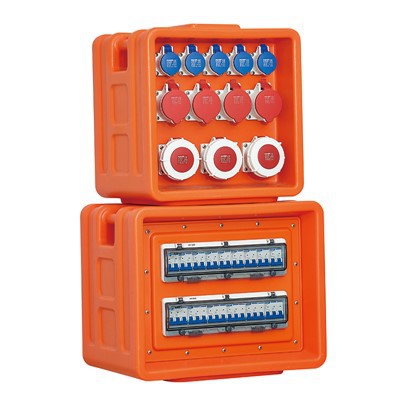
As a supplier, our goal isn’t just to sell you a 630A distribution box—it’s to give you a solution that reduces your maintenance costs, cuts down on downtime, and keeps your power running reliably for everyone who depends on it. We’ve worked with everything from small towns to large industrial facilities, and every time we adjust our anti-vandalism features to match their specific risks, we see better results. If you’re tired of dealing with vandalism costs, unexpected power outages, or unreliable distribution boxes that don’t hold up, we can help. We offer free site assessments to recommend the right anti-vandalism features for your location, and we can customize boxes to fit any specific needs you have. Reach out to our team anytime to talk through your project, ask questions about our products, or get a quote. There’s no one-size-fits-all answer to vandalism, but with the right design and the right partner, you can protect your equipment and keep your power running.
By Application REFERENCES
IEC 62208:2011, Empty enclosures for low-voltage switchgear and controlgear assemblies – Requirements
National Electrical Manufacturers Association (NEMA) 250, Enclosures for Electrical Equipment (1000 Volts Maximum)
IEEE 1625-2018, Standard for Renewable Energy and Efficiency Equipment for Parks and Outdoor Facilities
Association of Electrical and Mechanical Inspectors (AEMI) Vandalism Mitigation Guidelines for Distribution Equipment, 2022
U.S. Department of Energy, Grid Resilience: Reducing Vandalism-Related Outages, 2021
Apeks Electric Co., Ltd.
As one of the leading 630a distribution box manufacturers and suppliers in China, we also support custom service. With abundant experience, we warmly welcome you to wholesale high quality 630a distribution box from our factory. Welcome to view our website for more information.
Address: No.2 Yuyao Rd, Yuxin, Nanhu District, Jiaxing, China
E-mail: kevin@apekselectric.com
WebSite: https://www.powerdistros.com/
